
Results-Driven Website Design
The Blueprint for a High-Performance Website: Professional Web Design for Companies
31 October 2025

Your website should be working harder for your business than any single employee on your payroll.
Yet, when I review websites for companies considering a redesign, I consistently find the same pattern. They have something online, sure. It looks presentable enough. But it’s not actually doing much. It’s a digital brochure sitting there, passively displaying information whilst opportunities to generate leads, close sales, and serve customers simply evaporate.
The gap between a website that exists and a website that performs comes down to one thing. Planning. Actually, more than planning. A systematic blueprint that transforms web design for companies from a necessary expense into a measurable growth engine.
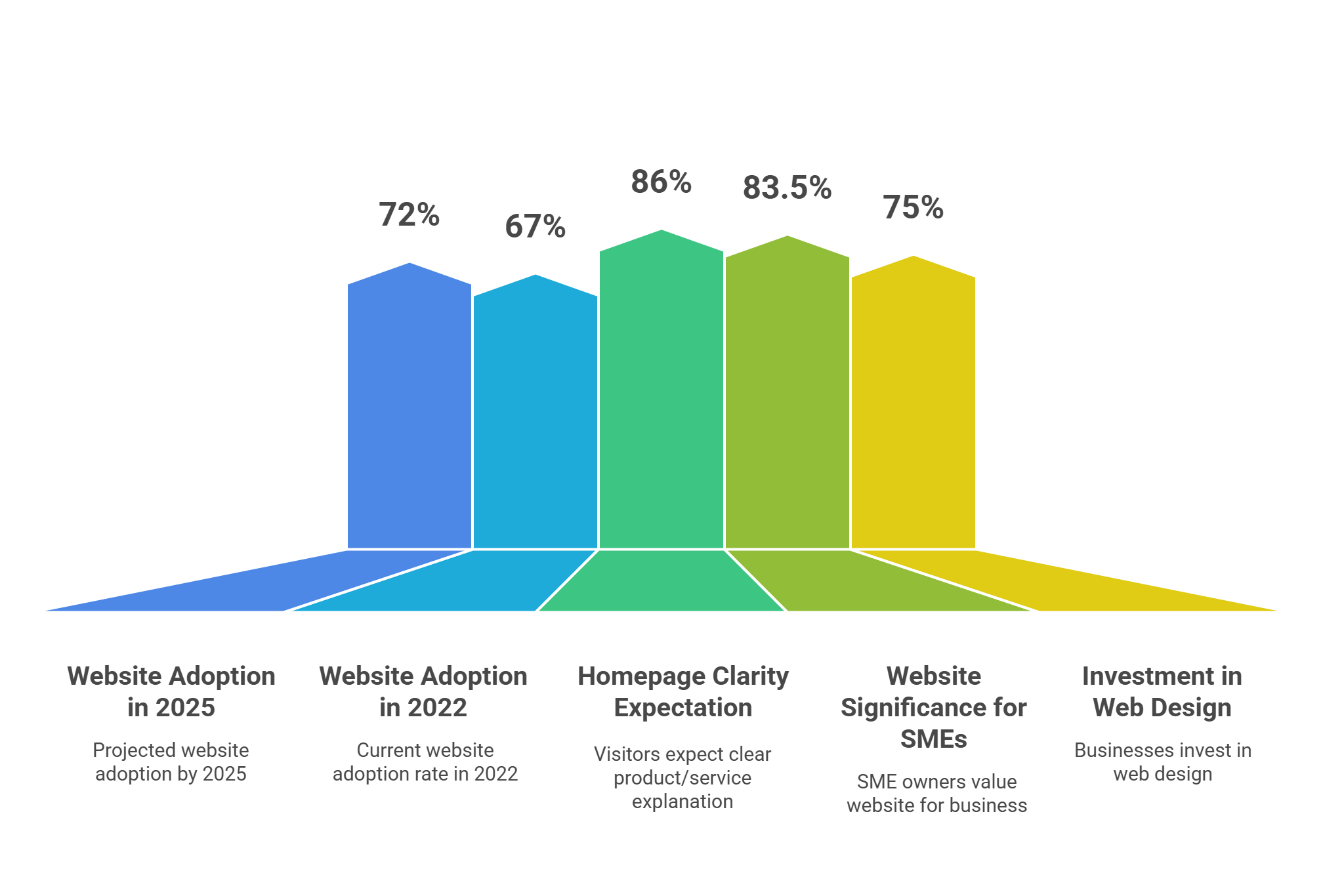
Here’s what the data tells us. In 2025, 72% of businesses in Europe have a website, up from 67% in 2022. That means nearly three quarters of companies have some sort of online presence. But having a website and having an effective website are entirely different propositions.
Consider this. A well designed user interface can boost conversion rates by up to 200%. That’s not a marginal improvement. That’s the difference between a website that generates ten leads per month and one that generates thirty from the same traffic.
This article provides the complete blueprint I use when working with companies who want to create a professional website that actually delivers results. Not just something that looks nice in screenshots, but a digital asset that generates measurable value month after month.
Understanding Your Website’s Strategic Role
Beyond the Digital Brochure
Right, let’s start with something that might sound obvious but gets overlooked constantly. Your website is not a brochure. It never was, but especially not in 2025.
I’ve worked with companies who spent fifteen thousand euros on a beautiful website only to treat it exactly like they treated their printed brochures in 2005. Static information. Annual updates if they remembered. No integration with their actual business processes.
The companies seeing real returns from web design think differently. Their websites function as integrated growth platforms connecting sales, marketing, and customer service. When someone fills out a contact form, it triggers workflows in their CRM. When a product page converts well, that data feeds back into their advertising strategy. When customers have questions, the website provides answers before they need to pick up the phone.
This shift from information display to business integration changes everything about how you approach web design for companies. The question stops being what colour should the buttons be and becomes how does this website support our revenue goals.
Actually, I should clarify that. Button colour still matters for conversion optimisation. But it’s not the starting point anymore.
Defining Success Metrics
Before you write a single brief or speak to a single designer, you need to know what success looks like. I mean genuinely know it. With numbers attached.
Here’s where most companies go wrong. They say things like “we want more leads” or “we need better brand awareness.” Those aren’t goals. Those are wishes. Goals have specific, measurable targets that you can actually track.
When I work with clients to create business websites, we establish metrics in the discovery phase:
- Lead generation targets: How many qualified enquiries per month would make this investment worthwhile?
- Conversion rate benchmarks: What percentage of visitors should complete your primary action?
- Customer service deflection: How many support calls could self service content handle?
- Revenue attribution: What portion of closed deals should originate from the website?
The European e commerce conversion rate averages between 1.8% and 3.2%, with Germany leading at 2.22%. The European e commerce conversion rate averages. If you’re running a B2B site, the benchmark is around 1.8%, whilst healthcare sites average 3%. the benchmark is around 1.8%
These benchmarks give you something concrete to aim for when you design a professional website. You can measure performance against industry standards and know whether your investment is delivering appropriate returns.
The Foundation Phase: Research and Strategy
Know Your Users, Not Just Your Preferences
This is going to sound harsh, but it needs saying. Nobody cares what you think looks nice.
I’ve sat in design reviews where executives spent forty minutes debating a shade of blue whilst having absolutely no data about what their actual users needed. The website wasn’t being built for them. It was being built for people who had problems that the company could solve.
User research comes first. Always. When we create professional websites, we start by interviewing actual customers and prospects. What were they looking for when they found you? What questions did they have? Where did they get frustrated in their buying journey?
Here’s what we know from the data. 86% of web visitors expect a company’s homepage to clearly explain its products and services. That’s not asking for much, is it? Yet you’d be surprised how many corporate websites make visitors hunt for basic information about what the company actually does.
The companies I’ve seen succeed with web design for companies spend proper time in this research phase. They talk to sales about the questions prospects ask repeatedly. They review support tickets to understand where customers get confused. They analyse their existing website data to see where people drop off.
This research shapes everything that comes after. Your site structure. Your content strategy. Your conversion paths. All of it.
Competitive Analysis
Look, I’m not suggesting you copy your competitors. That’s a terrible strategy. But you absolutely need to understand what they’re doing and, more importantly, where the gaps are.
When I conduct competitive analyses for clients, I’m looking for opportunities:
- What questions are competitors not answering on their sites?
- What content formats are they avoiding that might resonate with buyers?
- Where are their conversion paths unnecessarily complex?
- What technologies have they implemented or ignored?
The goal is not to match what everyone else is doing. The goal is to identify where you can provide a distinctly better experience that sets you apart. Sometimes that means doing less, not more.
Content Strategy and Information Architecture
Right, here’s where professional web design separates from amateur hour. The structure of your information matters just as much as the design wrapped around it.
I worked with a professional services firm last year who had all the right content. Case studies. Service descriptions. Team bios. Thought leadership. Everything. But it was organised according to their internal departmental structure, which meant absolutely nothing to prospects trying to solve a problem.
We restructured the entire site around user journeys instead. Someone researching a specific challenge could find relevant content without needing to understand the company’s organisational chart. Conversion rates went up by 47% without changing a single design element.
Information architecture covers:
- Primary navigation structure
- URL hierarchy and naming conventions
- Internal linking strategy
- Content categorisation and tagging
- Search functionality requirements
Get this wrong and even the most beautiful design won’t save you. Get it right and users find what they need intuitively.
Essential Features of Modern Web Design for Companies
Mobile First Responsive Design
Over 55% of web traffic in Europe comes from mobile devices. Over 55% of web traffic in Europe comes from mobile devices. Globally, that number jumps to 62.7%. Globally, that number jumps to 62.7%
Yet I still see companies who design for desktop first and treat mobile as an afterthought. That’s backwards. When you create website for business purposes in 2025, you start with mobile and scale up.
Mobile first doesn’t just mean the site works on phones. It means:
- Touch friendly interface elements sized appropriately
- Simplified navigation that works with thumbs, not mouse cursors
- Content hierarchy that makes sense in vertical scroll
- Form fields optimised for mobile completion
- Click to call functionality where appropriate
Actually, the B2B sector in German speaking markets still sees strong desktop usage for research and purchasing. So you need both to work brilliantly. But starting with mobile constraints forces you to prioritise what really matters in the user experience.
Page Speed Optimisation
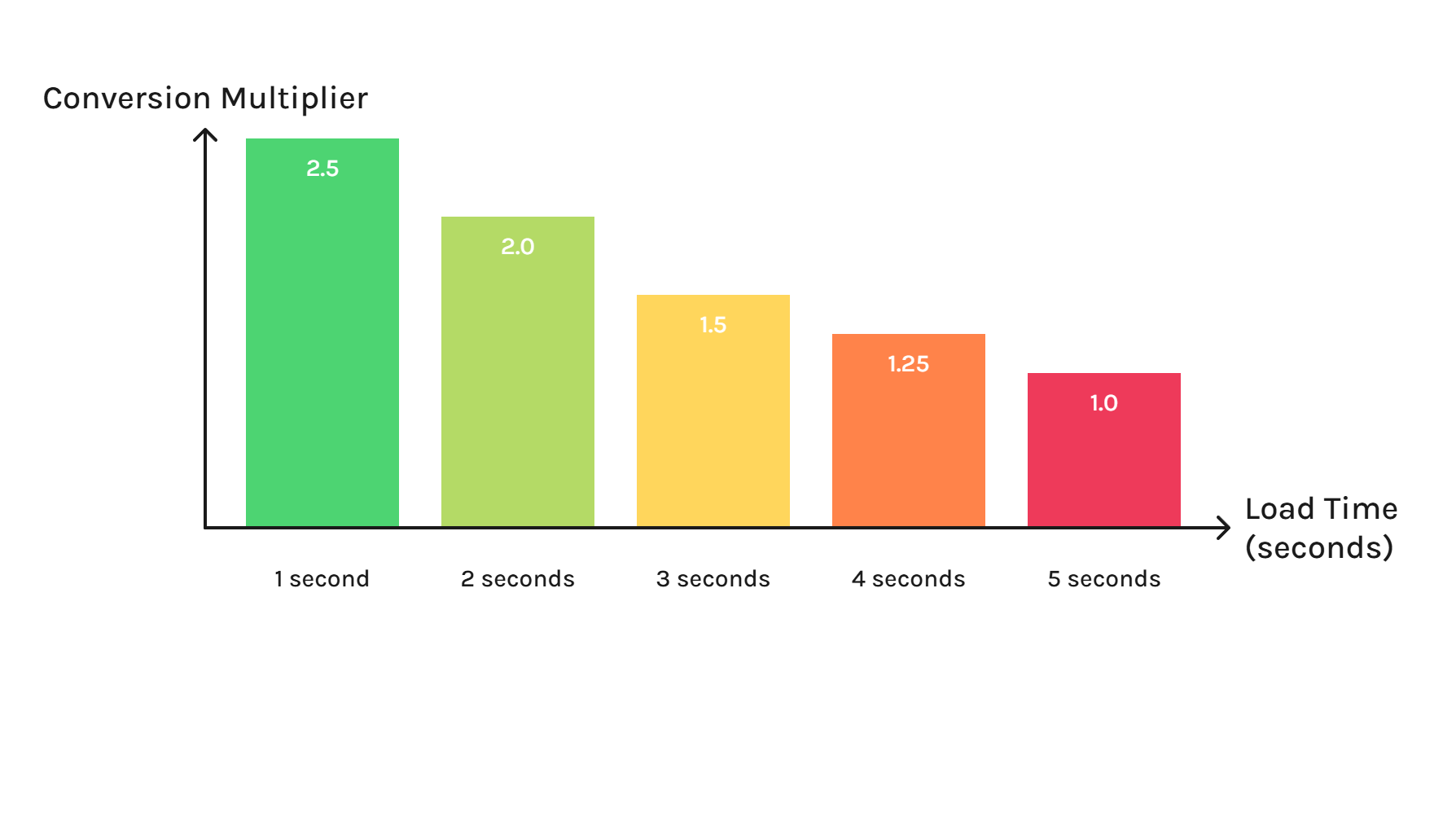
Sites that load in one second convert 2.5 times more than those taking five seconds. Sites that load in one second convert 2.5 times more.
Let me repeat that. Five seconds versus one second equals 150% fewer conversions. That’s massive.
And here’s the kicker. 53% of mobile visits are abandoned if a page takes longer than three seconds to load. You’re losing half your potential audience before they even see your content.
Page speed optimisation has become non negotiable for professional web design:
- Image compression and next gen formats like WebP
- Lazy loading for below fold content
- Minified CSS and JavaScript
- Content delivery network implementation
- Server response time optimisation
- Caching strategies for repeat visitors
This stuff sounds technical because it is. But it’s also critical for conversion performance. When evaluating agencies for web design for companies, ask specifically about their approach to performance optimisation.
Accessibility and Compliance
The European Accessibility Act becomes mandatory for most B2C and many B2B websites from June 28, 2025. The European Accessibility Act becomes mandatory.
Over 135 million people in the EU live with a disability. That’s not a small market to exclude through poor accessibility choices.
But beyond legal compliance, accessibility improvements benefit everyone. Clear navigation helps all users. Readable text benefits people without perfect vision. Keyboard navigation assists anyone who can’t use a mouse precisely.
When you design professional websites with accessibility built in from the start, you create better experiences for your entire audience whilst ensuring legal compliance.
Key accessibility considerations:
- Proper heading hierarchy for screen readers
- Alternative text for images
- Colour contrast ratios meeting WCAG standards
- Keyboard navigation support
- Form labels and error messaging
- Video captions and transcripts
Security and Data Protection
GDPR compliance is table stakes now, but security goes deeper than cookie banners and privacy policies.
Professional web design for companies includes:
- SSL certificates for encrypted connections
- Regular security updates and patches
- Secure form handling for sensitive data
- GDPR compliant analytics implementation
- Cookie consent management
- Data backup and disaster recovery planning
Security breaches damage trust in ways that beautiful design can never repair. I’ve seen companies lose major contracts because prospects discovered their website had basic security vulnerabilities.
The Design Process: From Concept to Reality
Choosing Between Custom Build and Templates
Right, here’s a question I get asked constantly. Should you use a template or build custom?
The answer, as with most things, is it depends.
Templates have improved dramatically. Modern premium templates for platforms like WordPress can provide 80% of what most SMEs need at a fraction of the cost. If you’re working with a limited budget and have fairly standard requirements, a well customised template might serve you well.
But. There’s always a but.
Custom builds give you:
- Complete control over functionality and user experience
- No bloated code from features you don’t need
- Unique design that differentiates you from competitors
- Scalability for complex or unusual requirements
- Optimisation specifically for your content and goals
In Germany and Austria, a standard SME website costs between €5,000 and €15,000 for a professionally designed, SEO optimised site with CMS. a standard SME website costs between €5,000 and €15,000. Larger or complex e commerce sites run €15,000 to €30,000, whilst custom enterprise projects can reach €20,000 to €50,000 or more. custom enterprise projects can reach €20,000 to €50,000 or more.
In Austria specifically, standard SME sites range from €1,500 to €6,000, with custom projects starting around €10,000 to €20,000. standard SME sites range from €1,500 to €6,000.
The investment level should align with your strategic goals. If the website is central to your growth strategy and you have specific requirements, custom builds deliver better long term value.
The Collaborative Design Process
Thing is, the best websites emerge from collaboration, not isolation.
I’ve worked with agencies who disappear for six weeks and then present a complete design with a “ta da” moment. Sometimes it works. Often it doesn’t, because critical context gets lost without ongoing dialogue.
The collaborative approach to create business websites involves:
- Discovery workshops with stakeholders
- User research shared transparently
- Wireframing before visual design
- Regular review cycles with structured feedback
- Testing with actual users before launch
- Iterative refinement based on real responses
This process takes longer than design by decree. But it produces better results because you catch misalignments early when they’re cheap to fix, not late when they require rebuilding entire sections.
Design Systems and Brand Consistency
Professional web design ensures brand consistency across every touchpoint. That means developing comprehensive design systems, not just individual page mockups.
A proper design system includes:
- Colour palettes with specific hex codes
- Typography hierarchy for headings, body text, and interface elements
- Button styles and states
- Form field treatments
- Icon libraries
- Image treatment guidelines
- Spacing and layout grids
- Animation and interaction principles
This level of detail ensures consistency as the site grows. When you add new pages or sections later, they feel like part of the same cohesive whole rather than tacked on additions.
Content Development for Business Websites
Writing for Conversion
I need to be direct about this. Most business websites are written terribly.
They’re full of corporate speak that sounds impressive but says nothing. They focus on features instead of benefits. They make visitors work too hard to understand what’s actually on offer.
When you create professional websites, content comes from understanding what your audience needs at each stage of their journey:
- Awareness stage: Educational content that addresses problems
- Consideration stage: Detailed information about solutions and approaches
- Decision stage: Specific reasons to choose you over alternatives
Each piece of content should have a clear purpose and a clear next step. If you can’t articulate why a page exists and what action you want visitors to take, you probably don’t need that page.
SEO Content Strategy
Nearly 3 in 4 businesses invest in web design, and 83.5% of SME owners say their website is a significant part of their business. 83.5% of SME owners say their website is a significant part of their business. That investment only pays off if people can actually find your website.
SEO starts during the strategy phase, not after launch. When we plan content for web design for companies, we research:
- Primary and secondary keyword targets for each page
- Search intent behind those keywords
- Content gaps where competitors aren’t serving users well
- Featured snippet opportunities
- Question based searches we can answer definitively
Technical SEO elements get built into the development specifications. Title tags, meta descriptions, header hierarchy, schema markup, XML sitemaps. All of it planned before a single line of code gets written.
Visual Content and Media
Stock photos of people in suits shaking hands or pointing at laptops don’t build trust anymore. Actually, I’m not sure they ever did.
Professional web design for companies requires authentic visual content:
- Behind the scenes photos of your actual team and workspace
- Real project examples and case studies
- Product photography that shows detail and context
- Explanatory diagrams for complex concepts
- Video content for processes that benefit from demonstration
Yes, this costs more than stock photography. But the credibility and connection it builds makes the investment worthwhile for companies serious about results.
Technology Platform Selection
WordPress and CMS Considerations
Look, I’m not going to pretend to be neutral here. Most of the professional websites I develop use WordPress. Not because it’s perfect, but because it offers the right balance of flexibility, cost, and capability for most business use cases.
WordPress powers a significant portion of the web for good reasons:
- Intuitive content management once set up properly
- Massive plugin ecosystem for extended functionality
- Strong SEO capabilities out of the box
- Active security and development community
- Scalability from small business to enterprise
But WordPress can also be implemented poorly. When evaluating developers for web design for companies, ask about:
- Their approach to theme selection or custom development
- Plugin strategy and how they avoid bloat
- Security hardening practices
- Update and maintenance procedures
- Performance optimisation techniques
Other platforms like Webflow, Shopify for e commerce, or custom solutions might better serve specific needs. The platform matters less than choosing one that aligns with your requirements and team capabilities.
Integration Requirements
Modern business websites rarely operate in isolation. They connect to:
- CRM systems for lead management
- Marketing automation platforms
- E commerce and payment processing
- Appointment booking systems
- Live chat and customer service tools
- Analytics and reporting platforms
- Email marketing services
Planning these integrations during the design phase prevents expensive retrofitting later. When you create website for business purposes, map out your technology ecosystem early and ensure the website can serve as the central hub it needs to be.
Launch Preparation and Testing
Pre Launch Quality Assurance
I’ve seen companies rush launches because of arbitrary deadlines, only to discover broken forms, missing content, or non functional features after going live. The scramble to fix issues whilst the site is public creates unnecessary stress and damages first impressions.
Comprehensive testing before launch includes:
- Cross browser compatibility verification
- Responsive design testing across device sizes
- Form functionality and email delivery
- Page load speed across different connections
- Link checking for broken or incorrect URLs
- Content proofreading and accuracy review
- Conversion tracking implementation verification
- Security testing and vulnerability scanning
Build time for testing and refinement into your project timeline. Rushing launches helps no one.
Migration Strategy
If you’re replacing an existing website, migration planning prevents traffic loss and maintains search rankings.
Critical migration elements:
- Content audit to identify what moves, updates, or archives
- URL mapping and redirect strategy for changed page addresses
- SEO value preservation through proper 301 redirects
- Timing considerations to minimise business disruption
- Backup and rollback procedures if issues arise
I worked with a client who launched a beautiful new website without proper redirects. Their organic traffic dropped 60% overnight because Google couldn’t find any of their historical content. It took three months to recover those rankings. Proper migration planning prevents those disasters.
Post Launch Optimisation and Growth
Ongoing Maintenance and Updates
Here’s what nobody tells you about professional web design. Launch isn’t the end. It’s the beginning.
Websites require ongoing maintenance:
- Security updates for platform and plugins
- Content updates to keep information current
- Performance monitoring and optimisation
- Backup management and disaster recovery testing
- Uptime monitoring and issue response
Companies who see websites as one time projects rather than ongoing assets consistently underperform. The businesses getting real returns treat their websites as living platforms that evolve based on user needs and business goals.
Conversion Rate Optimisation
Remember those benchmarks we discussed earlier? Returning visitors convert at 3 to 6%, whilst new visitors convert at 1 to 2%. Returning visitors convert at 3 to 6%.
After launch, systematic testing reveals opportunities to improve those numbers. Cart abandonment averages between 69 and 76%, and every 1% improvement can yield a 0.15 to 0.25% increase in overall conversion. Cart abandonment averages between 69 and 76%.
Conversion optimisation isn’t guesswork. It’s systematic:
- Establish baseline conversion rates for key actions
- Identify friction points through user testing and analytics
- Develop hypotheses about improvements
- Test changes methodically
- Implement winners and iterate
Small improvements compound. A site that converts 2% today could reach 3% or 4% through systematic optimisation. On ten thousand monthly visitors, that’s the difference between 200 and 400 leads.
Analytics and Performance Tracking
If you can’t measure it, you can’t improve it.
Proper analytics implementation tracks:
- Traffic sources and channel performance
- User behaviour and navigation patterns
- Conversion paths and drop off points
- Content performance and engagement
- Technical performance and errors
- Revenue attribution where applicable
Set up regular reporting that connects website performance to business outcomes. Monthly reviews of these metrics inform ongoing optimisation priorities and ensure the website continues delivering value.
Selecting the Right Web Design Partner
Evaluation Criteria for Agencies and Freelancers
Right, so you understand what good web design for companies involves. Now you need to find someone who can actually deliver it.
When evaluating potential partners, look beyond portfolio aesthetics:
- Strategic approach: Do they start with discovery and research, or jump straight to design?
- Process clarity: Can they articulate their methodology clearly?
- Technical capability: Do they demonstrate deep platform knowledge and performance focus?
- Communication style: Are responses timely and explanations understandable?
- Project management: How do they handle timelines, feedback, and changes?
- Post launch support: What happens after the site goes live?
Ask for case studies with specific results, not just pretty screenshots. Anyone can make things look nice. The question is whether those nice looking things actually performed.
Questions to Ask Prospective Designers
Here are questions that reveal whether an agency or freelancer truly understands professional web design:
- How do you approach user research and what methods do you employ?
- What’s your strategy for mobile optimisation and performance?
- How do you handle accessibility and legal compliance requirements?
- What’s your approach to SEO integration throughout the design process?
- How do you measure success for client projects?
- What ongoing support and maintenance do you provide?
- Can you walk me through your typical project timeline and key milestones?
- How do you handle revisions and change requests during development?
The quality of their answers tells you more than any portfolio ever could.
The Real Value of Professional Web Design for Companies
Let’s bring this full circle.
A well designed user interface can boost conversion rates by up to 200%. For a business generating €500,000 in annual revenue through their website, doubling conversion rates means an additional half million euros. Even a 50% improvement adds €250,000.
That’s not the only value, though. Professional web design ensures brand consistency, scalability, and legal compliance. It reduces customer service costs through self service content. It shortens sales cycles by answering questions proactively. It builds credibility that makes every other marketing effort more effective.
The companies I’ve seen succeed don’t view web design as an expense. They view it as infrastructure. Like their office, their equipment, their staff. Critical business infrastructure that requires appropriate investment and ongoing attention.
When you approach web design for companies with that mindset, everything changes. You ask better questions. You make smarter decisions. You build something that actually delivers measurable value month after month, year after year.
Your website can absolutely be your hardest working asset. But only if you build it with that intention from day one.
Frequently asked questions
How do I choose the right web design company for my business needs?
Focus on project management methodology, relevant experience, and communication practices rather than just portfolio aesthetics. Ask potential partners how they handle scope changes, what their post-launch support includes, and request references from clients with similar requirements. Research shows Agile-managed projects succeed at rates three times higher than traditional approaches, so understanding their methodology matters enormously. Red flags include reluctance to provide references, unclear pricing, and dismissiveness about your questions. The right partner should ask detailed questions about your business objectives before proposing solutions.
Why is having a professional website important for a company's success?
Your website serves as the central hub where all marketing efforts ultimately direct prospects. Research shows 75% of people judge a company’s credibility based on website design, whilst 88% of users will not return after a poor experience. In practical terms, your website operates as a 24/7 sales and marketing asset. When properly designed, it generates leads, answers customer questions, builds brand credibility, and supports sales conversations. The business impact is measurable: faster page loads directly improve conversion rates, with studies showing that improving mobile load time by just 0.1 seconds can increase conversions by 8.4%.
What are the main differences between a custom-built website and a website template?
Custom-built websites offer complete flexibility to match your specific business requirements, unique design that differentiates your brand, optimised performance tailored to your needs, and scalability to support growth. Templates provide lower upfront costs and faster deployment but limit customisation options, often include unnecessary code that impacts performance, may look similar to competitors using the same template, and can create challenges when you need functionality beyond what the template supports. The right choice depends on your budget, timeline, and business complexity. Many successful businesses use customised templates that balance cost efficiency with strategic flexibility.