
Results-Driven Website Design
Is Your Website Affected by the European Accessibility Act? A Guide for Austrian Businesses
9 June 2025
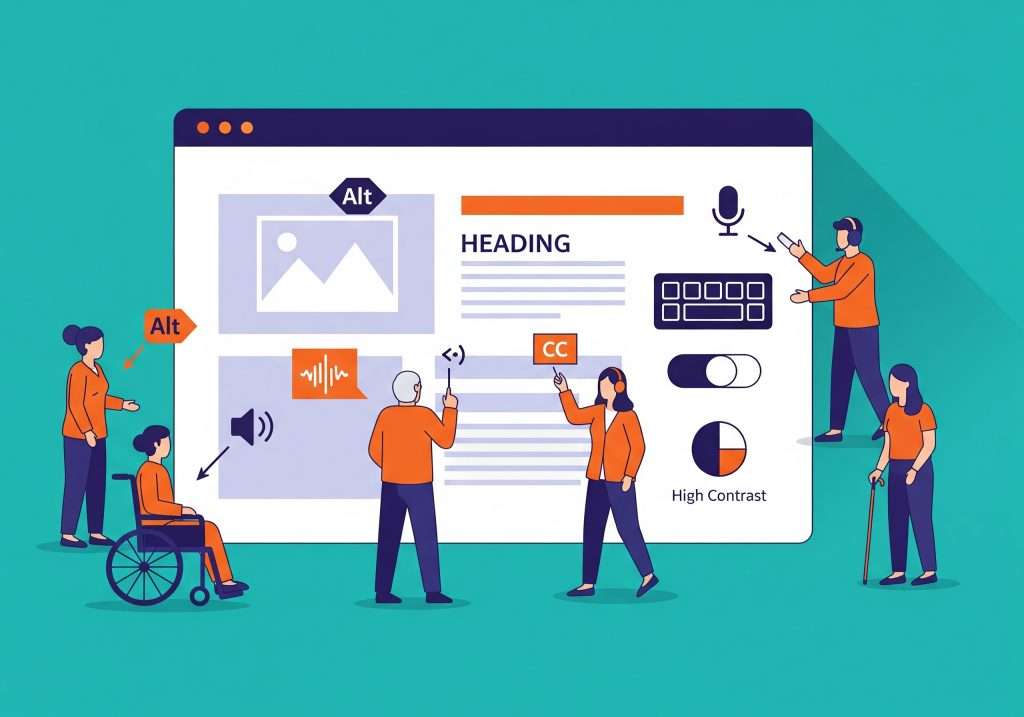
If you have a business in Austria with an online presence, an important piece of legislation, the Barrierefreiheitsgesetz (Accessibility Act), which transposes the EU’s European Accessibility Act, might apply to you. The Barrierefreiheitsgesetz is Austria’s implementation of the EU accessibility directive, which sets out harmonized accessibility standards across the European Union. This law requires certain websites and online services to be accessible to people with disabilities.
The European Accessibility Act was developed and adopted with the involvement of the European Commission and the European Parliament, so there’s a unified approach to accessibility across all EU countries.
But how do you know if your website is one of them? It mainly comes down to what your website does. Let’s break it down.
The New Era of Digital Accessibility in Austria
A new chapter in digital accessibility is opening up in Austria and the European Union with the European Accessibility Act (EAA). Coming into force in June 2025, this accessibility act sets out accessibility requirements for a wide range of products and services, and will change how businesses approach their digital offerings. The EAA’s main goal is to remove the barriers that have long prevented people with disabilities from fully participating in the digital world, so everyone can have equal access to services.
For Austrian businesses this means everything from banking services and e-commerce services to audiovisual media services must now be designed with accessibility in mind. The directive doesn’t just apply to public sector bodies – it extends to private sector companies that provide services or sell products within the internal market of the European Union. Whether you offer online payment services, streaming platforms or digital banking, the EAA’s accessibility requirements will become part of doing business in the EU.
By aligning national laws with the European Accessibility Act, Austria is creating a more inclusive digital environment where everyone can access products and services without unnecessary obstacles. As the digital world evolves, understanding and implementing these new requirements is key for any organization that wants to succeed in the European market and support the rights of people with disabilities.
Which Websites and Services Are Covered by the Law?
The law specifies the services covered by the EAA, targeting websites and mobile apps that are considered “e-commerce services”. This is a broad term that covers more than just traditional online shops. Your website is likely affected if it provides:* Online Sales: Any service that allows a customer to conclude a contract to buy a product or service. This includes webshops selling goods, travel portals for booking flights or accommodation, and any platform where a user can make a reservation or purchase.
- Consumer Banking Services: Websites and apps that provide online banking functionalities, including check in machines and operating systems ATMs, as well as services related to financial transactions.
- Passenger Transport Services: This includes websites and apps for air, bus, rail and waterborne passenger transport that provide information, allow for electronic ticketing, offer real-time travel updates and use check in machines.
- Access to Audiovisual Media: Services that provide access to media content, including audio visual media services such as television broadcast and related consumer equipment, as well as websites, streaming apps and electronic programme guides (EPGs).
- E-books and Dedicated Software: Platforms where users can access, read and use e-books.
- Operating Systems and Mobile Applications: Personal computers, operating systems and mobile applications are also required to comply with accessibility requirements under the EAA.
- Healthcare Services: Healthcare services and services related to healthcare organizations may also be impacted by the EAA.
- Various Services: The EAA applies to various services, including those related to transportation, banking, digital media and other services covered by the directive.
The Key Definition: What are the Applicable Accessibility Requirements for an “E-commerce Service”?
The law is built around a specific legal definition, which is key to understanding its scope.
According to the EU Directive, an ’e-commerce service’ means “services provided at a distance, through websites and mobile device-based services by electronic means and at the individual request of a consumer with a view to concluding a consumer contract.”
- Reference: Directive (EU) 2019/882, Article 3, point (30).
This means that if your website’s purpose is purely informational—like a personal blog or a simple company “brochure” site with no sales or booking functions—it would generally not be required to comply under the “e-commerce” rule.
Who is Exempt from the Law and Accessibility Requirements?
Not every business is required to comply. The law includes several important exemptions:
- Micro-enterprises providing services: This is the biggest exemption. Your business is considered a micro-enterprise and is exempt from the service accessibility requirements if you have fewer than 10 employees AND an annual turnover or balance sheet total of no more than €2 million.Reference: Directive (EU) 2019/882, Article 3, point (23) for the definition, and Article 4, paragraph (5) for the exemption.
- Archived or Old Content:
- Websites and mobile apps that qualify as archives (meaning their content is not updated or edited after June 28, 2025) are exempt.
- Pre-recorded media (like videos) and office file formats (like PDFs) published before June 28, 2025, are also exempt.
- Reference: Directive (EU) 2019/882, Article 2, paragraph (4).
- Third-Party Content: If your site displays content that you did not fund, develop or control (for example, an embedded Google Map or a user-generated comment section), you are not responsible for its accessibility.Reference: Directive (EU) 2019/882, Article 2, paragraph (4), point (d).
- Disproportionate Burden: In rare cases, a business can claim an exemption if compliance would impose a “disproportionate burden” (i.e., excessive organisational or financial costs relative to the business’s resources). This requires a formal, documented assessment.Reference: Directive (EU) 2019/882, Article 14.
What Happens If You Don’t Comply? Risks and Penalties Explained
Failing to meet the European Accessibility Act’s requirements can have serious consequences for businesses operating in the EU market. Market surveillance authorities are tasked with ensuring that all products and services, including websites and mobile apps, comply with the applicable accessibility requirements. If your business is found to be non-compliant, you could face substantial fines—potentially up to three million euros. In addition to financial penalties, non-compliant products and services may be withdrawn from the market, and your right to provide services could be suspended until you achieve compliance.The European Disability Forum and other advocacy groups are watching the implementation of the EAA, and digital accessibility is for all users, not just persons with disabilities. Non-compliance exposes your business to legal obligations and enforcement actions and can damage your reputation in an increasingly accessibility-conscious digital world.
To avoid these risks, take a proactive approach: review your digital offerings (websites and mobile apps) and ensure they meet the EAA requirements. By doing so you not only protect your business from fines and market restrictions but also contribute to a more inclusive society and open your products and services to a wider audience and strengthen your position in the EU market.
Further Reading:
- Directive (EU) 2019/882
- WKO: Das Barrierefreiheitsgesetz für Tourismus- und Freizeitbetriebe (in German)
This information is for general information purposes only and is not legal advice. Please consult a qualified lawyer for legal advice.